 SWERVEinstitutional film, ninety-eight seconds
Invision
Precision Surfaces- Finished surface
- Slab
- Adhesive
- Substrate
- Plan
What the first script was missing
The eighteen scenes you wrote are the right eighteen scenes. Every stage of the method is there, in the right order, with the right restraint. The problem is structural: the film states its case eighteen times and never once tests it. A viewer watches a catalogue of good practice and has no reason to doubt, or believe, any of it.
A process film that never catches anything is a brochure. A process film that catches something is proof.
Two changes fix it without touching the method. The film now opens on its own last frame, and somewhere in the middle the system finds a problem: a zone fails tolerance, gets flagged and gets corrected on camera. Everything else stays. The anchor line does more work now, because the film has earned it by the time it arrives at 1:11.
Act One. The promise
0:00 to 0:10The film opens on its own ending, then cuts back six months.
Act Two. The system
0:10 to 1:16The method, ordered as plan, control, execute, verify.
Act Three. The proof
1:16 to 1:38The loop closes on the opening image, now in full.
The board, as drawn
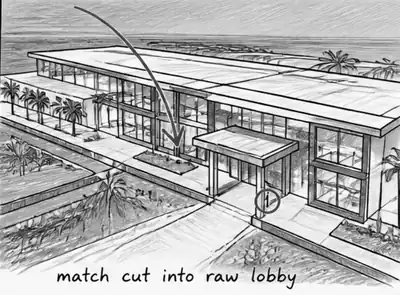
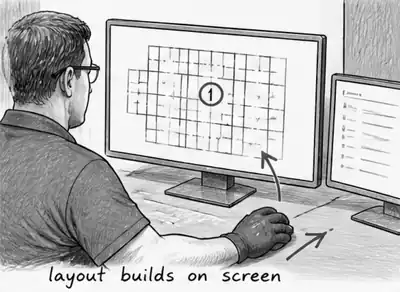
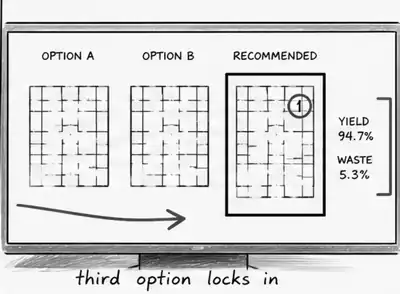
Two sheets, twenty panels. Camera moves, focal markers and timing notes are annotated on the panels themselves, in the language a director reads.
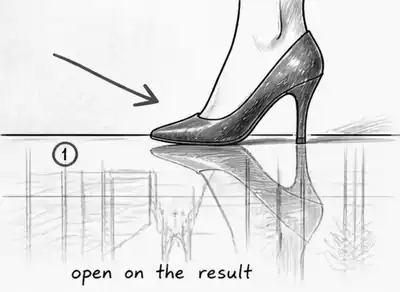
Everything that makes this floor extraordinary happened before anyone stepped on it.
A heel meets the finished porcelain. The whole lobby appears inverted in the reflection.
Frame by frame
Every frame carries a line of voice-over and a job in the cut. Select one to read what it says and why it is there.
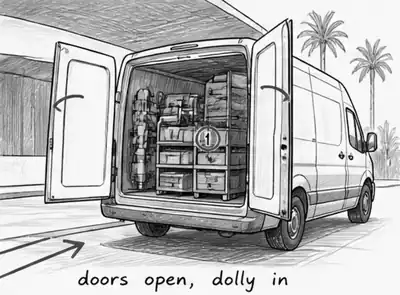
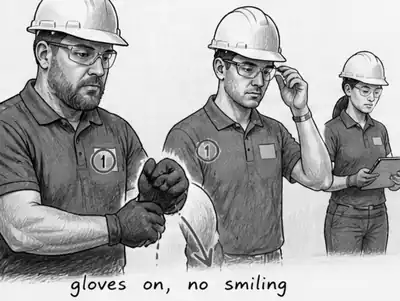
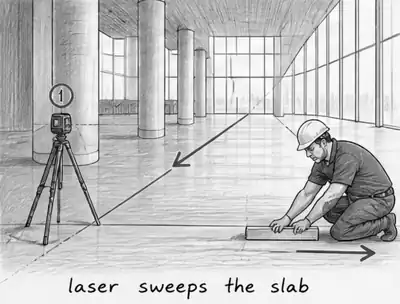
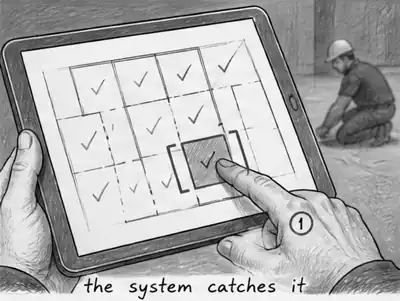
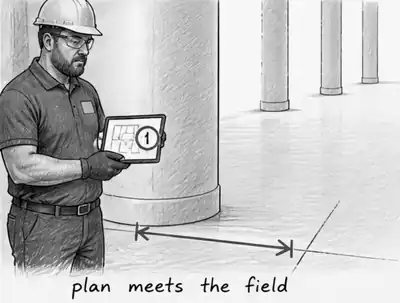
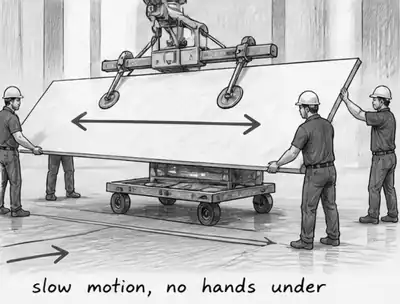
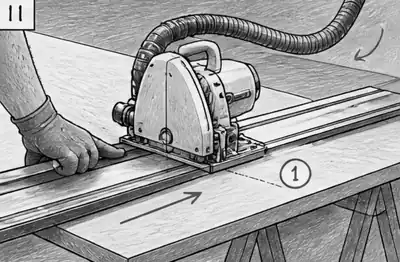
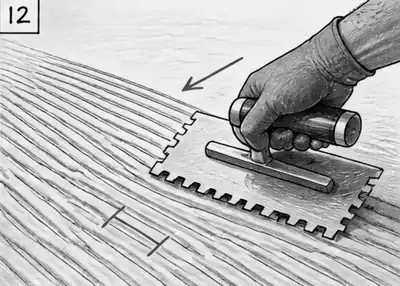
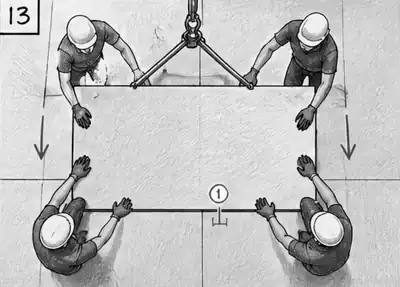
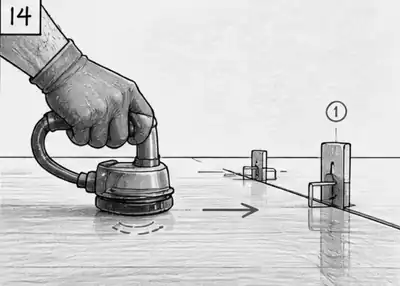
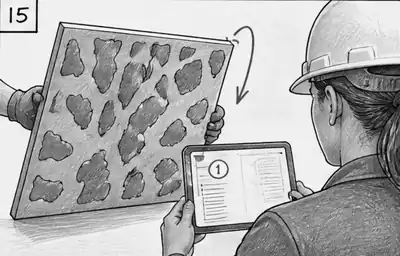
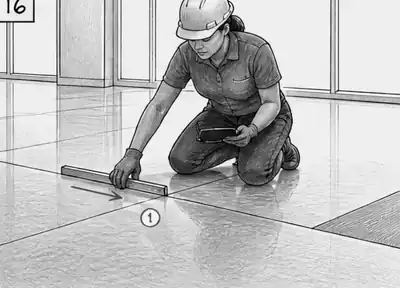
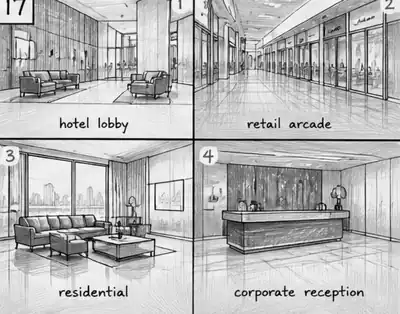
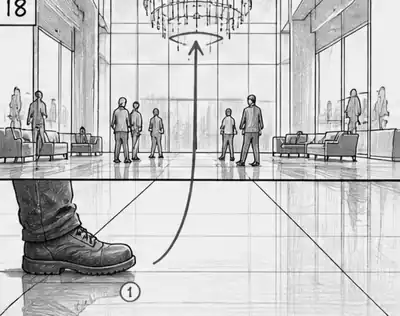
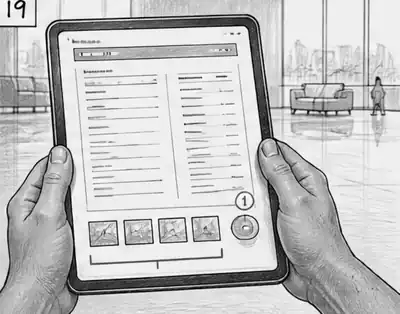
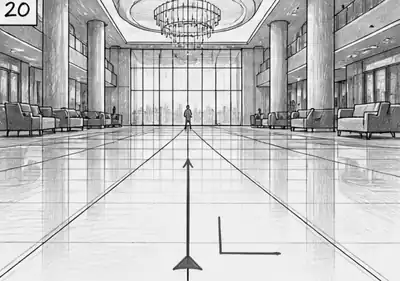
- Key frames
- Motion
- Grade and sound
- Master and cuts
Each approved panel becomes a photographic frame with the uniform, the lobby and the light locked in writing, so frame eighteen still matches frame two.
Why this is possible at all
A film like this normally needs a finished five-star lobby, an active installation running on schedule inside it, and a crew allowed to stand in both. Those three things almost never exist on the same day.
It also unlocks shots that were never available: the overhead at 0:57, which would need a crane rigged over a live installation, and the macro inside the cut, where no operator would be allowed to stand.
| Conventional | This production | |
|---|---|---|
| Shoot days on an active jobsite | Two to three | None |
| People on set | Eight to twelve | None |
| Site access, permits, drone clearance | Required | Not required |
| A revision after delivery | A reshoot | One frame regenerated |
| Time to master | Five to seven weeks | Twelve business days |
One film.
A system of cuts.
The hero film is the heart. Around it, a family of cuts built for every point of contact in the sale, from the trade show screen to the bid presentation.
The four verticals
- The catch0:33, the zone that failed and got corrected
- Large format handling0:42, the slab crossing the lobby in the air
- The cut0:48, rail, diamond, extraction, no music
- Invision Verified1:11, the straightedge and the closing checklist
Scope and terms
- Story and script
- Rewritten arc, twenty beats, voice-over locked to timecode
- Sound
- English voice-over, licensed score, full sound design pass
- Graphics
- On-screen type, checklist states and the Surface Passport panel
- Revisions
- Two rounds, at frame level
- Ownership
- Unlimited perpetual rights to every file listed